The Prodigal Son
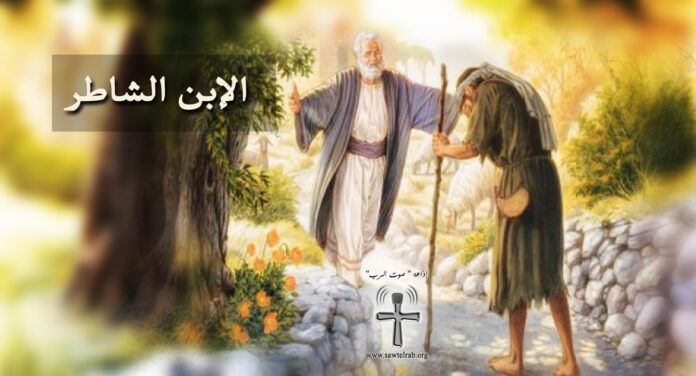
Today is the fourth Sunday of Lent: the prodigal son, the one who demanded his share of his father’s inheritance and took it.
From our human point of view, both sons, the elder and the younger, deserve neither reward nor compensation. A god who satisfied our feelings and emotional impulses would reject them both.
The younger one deserves punishment for rebelling against his father, demanding his share of the inheritance and leaving home, because he no longer felt it was his home, the place of his freedom and natural growth; he went as far away from home as he could, to a distant country.
The elder one also deserves punishment, because he lacks spirit and humanity. He is at home as if he were not at home. He works for the sake of working, thinking that work alone will earn him the reward. There is no difference between him and a hired hand.
The two, elder and younger, represent the religious and social situation that prevailed among the Jewish people in Christ’s time.
Over time, the people’s hearts had drifted away from God; a rigid Pharisaic mentality had taken over, and the people had become prisoners of the letter and made a “god” in their own image and likeness.
Hence the harsh and painful judgments against anyone who disagreed with them or who struggled with certain problems in life.
It was this “god” that Jesus fought and rejected in them. Jesus stood up against this unmerciful, unjust and unloving “god”, argued with them and disagreed with them.
He showed them in his words, parables and miracles that the true God is “other” in his love, not in hardness of heart; “other” in his closeness, not in separating people from one another; “other” in how he approaches earthly matters, not only in following the letter that kills; “other” in his way of praying, being present, looking, dealing with people and explaining the Word, not in imposing himself as a harsh ruler without heart or feeling.
This “other” God is the one Jesus revealed in every aspect of his life, declaring and affirming to them: “This is the true God.”
He is a Father, not just a god above the clouds. He loves, he feels, he dwells among us and is like us in all things except sin.
Because this God is “other”, he had the capacity for a boundless love, far from human passions, to embrace both sons, the younger and the elder, dealing with them not by the reflex of the Law but only by the power of love.
This is the importance of the parable of the prodigal son: through it we come to know better our true God, whom we have seen and known in Jesus… He is God.
Grant us, Lord Jesus, the strength to repent, to tear out of ourselves the gods we have manufactured over time, and to receive you, the true God, in love, forgiveness
and true life… Amen.
Fr. Joseph Abi Aoun