The rite of the Hajmeh (“the assault”) in the Eastern Church
In some Eastern Christian liturgies, the Divine Liturgy of Pascha is preceded by a rite called the “Hajmeh” (the storming of the gates), usually held before the midnight Liturgy or at dawn.
What does this rite mean, and how is it celebrated?
The Hajmeh represents Jesus Christ’s descent into Hades after his death on the cross, to free the souls of those who had fallen asleep in the hope of redemption and resurrection.
Its purpose is to remind the faithful of what the Lord Christ did after his death: how he went down into Hades and conquered the power of death, to free those who had fallen asleep in the hope of salvation from Satan’s prison, from the devil’s captivity and from the darkness of Hades, and to take them with him to paradise, the place of rest and bliss.
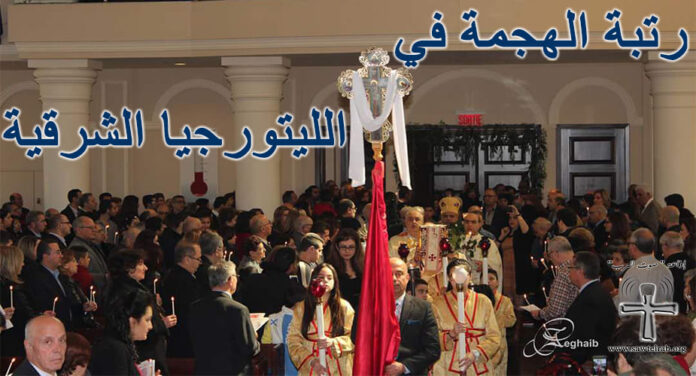
The “Hajmeh” begins with the priests and deacons standing outside the church door; the door is closed, the sacristan stays inside, all the lights are put out, and the faithful hold lit candles. The Gospel is read, then the prayers and hymns proper to the rite are said. Before entering the church, the senior priest (or the bishop, if present) calls from outside: “Lift up your heads, O gates! And be lifted up, O ancient doors, that the King of glory may come in!” He says this twice while knocking on the door, and each time the sacristan answers from inside: “Who is this King of glory?” The third time, the priest replies: “The Lord, strong and mighty, the Lord, mighty in battle; he is the King of glory!” (cf. Psalm 24:7-10), and strikes the church door, which opens. The priest says: “Come, receive the light from the never-setting Light.” At once the lights come on, and the priests and deacons go around the church three times carrying the icon of the Resurrection, crosses and candles, singing: “It is the day of Resurrection… Pascha, the Pascha of the Lord!” and “Christ is risen from the dead, trampling down death by death, and upon those in the tombs bestowing life”, along with other Resurrection hymns.
Then the Divine Liturgy of the feast begins.
Watch a clip of this rite in this video: