Christmas Greetings
“Glory to God in the highest, and on earth peace among those whom he favours.”
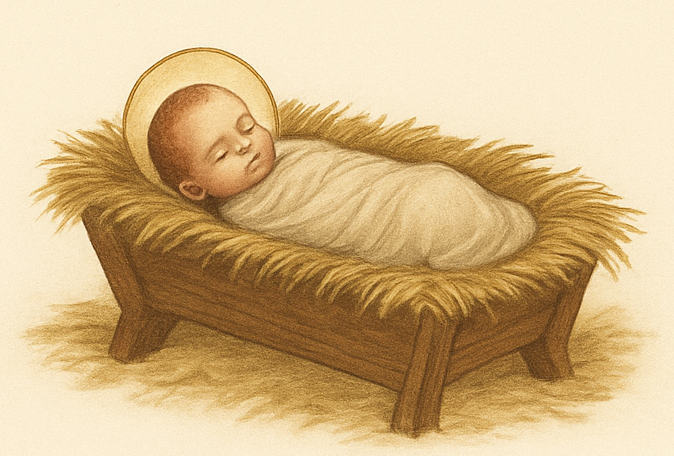
With this cry of the angels and this good news, I greet you with my fatherly prayers on the feast of Christmas. I ask God for all of you, your children, your families and everyone around us and around you, a blessed year and a time of peace, of gladness, reconciliation and joy among all people. The Child of the cave, in his weak human form, remains the God of peace; and we his disciples are apostles of peace, redeeming the world as he redeemed it, through self-denial and seeking the lost. At Christmas we pray together, not only for ourselves, our friends or our neighbours, but “for people” and “for the earth”, as the angels announced to the shepherds at Jesus’ birth. And this prayer of ours is not just words: it is a responsibility, with all the sacrifices it demands.
At Christmas “God” is revealed: how he is and who he is. And at Christmas God’s will is revealed too. Religions in general speak about God and give images of him, some true and some sometimes incomplete. The Old Testament did not see God either, and did not fully express his will. Before the time of the New Testament and the day of the Incarnation, people hear about God and receive laws that seek to express God’s will. So we have religion and law. Religion is a philosophy of faith, a philosophy that draws in words the One whom no words can contain. And we have the law, which over history expanded into the smallest details of daily life, often making it a prisoner of regulations, until Paul described it as dead: “The letter kills, but the Spirit gives life.”
On the day Jesus was born, religion and law were transformed: doctrine and law changed. God became visible, and we no longer need a philosophy of religion; God’s will was revealed, and we are no longer slaves to legislation.
Do you want to understand God, or rather to see God, whom the Old Testament believed no one could see and live? “Come and see.” This is the Christian’s answer after Christmas. Today God answers Moses’ request: “Lord, show me your face.” And today God sends his will not on tablets of stone (the Law) but in his Son, the Word made flesh, the living will of God.
The God we talk about is God as far as words allow and as far as understanding allows. But God incarnate is God “as he is”, beyond our words and free from the distortions of our ideas.
Who is God? Read the Gospel, love Jesus, call out as the book of Revelation does: “Come, Lord Jesus!”
So at Christmas “God as he is” was revealed, not as we wrote or understood him. The phrase “God as he is” means many things, but above all it tells us a few basic truths:
That God is Trinity. We have seen the Son, which means there is the Father. And the Son told us, not through prophets but directly, that God is Trinity in one God. And that God is “love”. What good news! If God had appeared only as just, we could not proclaim joy, but rather judgment. And if God had appeared unjust, it would be even worse, and the Gospel (the good news) would be bad news. But what joy for us: God loves even to the point of the Incarnation and beyond, to the cross, the resurrection and the ascension.
And that God took “our flesh”. This is not to diminish his dignity but to raise ours. The Incarnation is not a humiliation for God but an honour, because it is for our dignity, and this is God’s glory: to glorify us. Platonic thought has influenced many interpretations in various religions, and to some extent even Christian commentaries: that way of thinking sees the body as evil, a prison of the soul, and places perfection in escaping from it, so the Incarnation would mean a fall. In Christianity, on the contrary, sin does not come from the body but from the soul. The body is not evil. So if in Platonism the Incarnation would be a disgrace for God, in Christianity it is the sign of his infinite love, and therefore the image of his glory.
At Christmas God’s will was also revealed – not as human laws wrote it, with their human elements, even to the point the Lord Jesus condemned in the Gospel when he rebuked the lawmakers who cancelled the true law to set up their own commandments, and killed mercy while tithing mint.
“God’s will as it is” has been revealed. Jesus is the Word of God in the sense that he expresses God’s thought and will, just as a word expresses a thought. And what good news! Here is God’s will:
to fulfil his love for us, to redeem us, to glorify us, and not to leave us alone. The Incarnation proves that God loves responsibly and not in pretence. The Incarnation proves that “God is with us” in reality, not through messages and messengers. The Incarnation means that he came to carry our burdens, heal our diseases and lift our weaknesses, and that by his wounds we are healed. The Incarnation is the proof that God is with us in order to glorify us.
This is our good news at Christmas: great joy, because God is love and wants us to live. He came to be “with us”, to work “with us”, and for us to be glorified with him, that is, for him to be “with us” in his glory and for us to be with him in his glory.
“Glory to God in the highest, and on earth peace among those whom he favours.” Amen.
Fr. Gerard Abi Saab