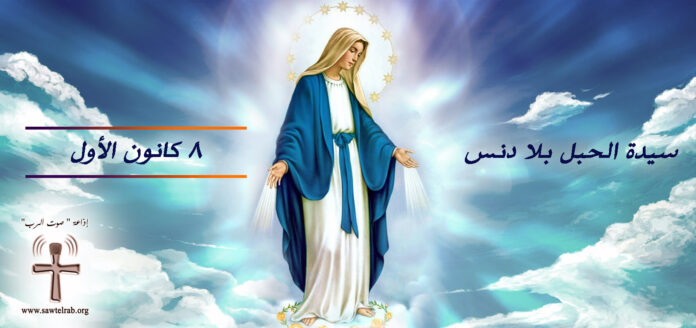
The Feast of the Immaculate Conception
Pope Pius IX proclaimed the dogma of the Immaculate Conception on 8 December 1854, defining that “the most Blessed Virgin Mary, in the first instance of her conception, by a singular grace and privilege granted by Almighty God, in view of the merits of Jesus Christ, the Saviour of the human race, was preserved free from all stain of original sin”.
What does this sentence mean?
We will look at its parts and explain them in detail, based on an explanation published by the New Advent website.
“The most Blessed Virgin Mary”
The one preserved from original sin here is the person of Mary, at the moment God created her soul and infused it into her body.
“In the first instance of her conception”
The word “conception” does not mean the active or generative conception by her parents. Mary’s body was formed in her mother’s womb with the natural participation of her father. So the question is not about the holiness of her parents’ generative act, nor about the passive conception which, in the order of nature, comes before the infusion of the soul, since a person truly comes into being when the soul is created and infused into the body. Mary, then, was free of every trace of original sin from the first moment of her animation, and sanctifying grace was given to her before sin could mark her soul.
“Was preserved free from all stain of original sin”
These words mean that the formal essence of original sin was not removed from Mary’s soul by baptism, as it is for everyone else, but was kept away from her soul and never entered it. In place of the original sin with which we are born, she was given an original state of holiness, innocence and justice. In this state every stain, every disordered passion and weakness belonging to original sin was excluded. But Mary was not exempted from the “temporal penalties of Adam”: sorrow, bodily weakness and death.
“By a singular grace and privilege granted by Almighty God, in view of the merits of Jesus Christ, the Saviour of the human race”
Freedom from original sin was given to Mary as a unique exception to the universal law, through the very merits of Christ by which everyone else is cleansed in baptism. Mary needed the redeeming Saviour to receive this exception and to be delivered from the universal necessity of being subject to original sin and from the debt it brings. As a descendant of Adam, Mary’s person would have been subject to sin. But because she is the new Eve, destined to be the mother of the new Adam, she was set apart from the general law of original sin by God’s plan and the merits of Christ. Her preservation was the work of the wisdom of Jesus the Saviour, for he is the great Redeemer who pays the debt that falls on us.
As for the proofs that can be drawn from Scripture and the sources of faith, we find them in the Book of Genesis (3:15), where we read of the enmity between the seed of the woman and the seed of the serpent, and in the Gospel of Luke (1:28): “Hail, full of grace”. Anyone who reads Proverbs 8, Sirach 24 (the praise of God’s Wisdom, which the liturgy applies to Mary) and the Song of Songs can apply these passages to Mary. Besides this, there are the proofs that can be drawn from Tradition and from the titles of purity given to Mary by the Fathers and the saints.
It is worth mentioning here that the ancient feast of the Conception of Mary, or the Conception of Saint Anne, arose in the monasteries of Palestine in the seventh century, and its name and meaning varied according to the surviving documents. But the feast of the Immaculate Conception that we celebrate today is not the same in substance. (From Zenit)
Prepared by Rita of the Sawt el Rab team