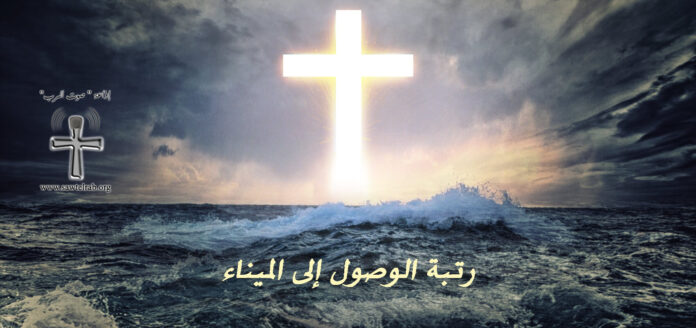
In the Maronite rite, the Rite of Arrival at the Harbour is celebrated on the evening of Palm Sunday, that is, after the six weeks of Great Lent. It expresses the arrival of the Bridegroom, the Lord Jesus, who comes to take with him the faithful who have grown rich in good works during the forty-day fast and are ready for Holy Week, to pass with him through the cross and death (the duty of fasting continues until Holy Saturday, the Saturday of Light), so as to reach the glory of the Resurrection afterwards.
In the past this rite was celebrated in the third nocturn of the midnight office between Sunday and Monday; now it is celebrated before Evening Prayer, outside the church.
Here is how the rite unfolds: the deacon chants a litany, to which the people respond: “Fill our hearts, O Lord, with the light of the Kingdom.” The celebrant knocks on the door three times, then he and the people enter the church.
When he reaches the altar, he removes the violet covering and puts on the purple colour, a deep crimson red, symbol of the blood and of the royal character of Christ’s Passion. The white altar curtains are taken down and black ones are put up; the cross is draped in black and the lights are dimmed: all this to announce the beginning of Holy Week. This rite is followed by Evening Prayer and the procession of the Cross.
After this, Holy Week truly begins: the “Alleluia” is replaced by the Kyrie eleison and by the chants “Hem wa hem”, “Teshbouhto l’Moryo” (Praise the Lord) and “Moran etrahame ‘layn” (Lord, have mercy on us). The priest does not greet the people with “Peace be with you all” or “Peace to the Church and her children”; the deacon does not say “Bless, master” at the prayers and readings; the celebrant does not bless the reader after the introduction to the Epistles; the introductions to the Gospel are not said in the solemn way (instead of Alleluia we say “Hem wa hem”, and instead of “Be silent, you who listen…” we say “Have mercy on us, O Lord”); and the Gospel reading does not end with “Truly, and peace be with you all”, but the celebrant blesses the people with a sign of the cross made with the Gospel book. The holy water is also removed from the font at the back of the church; and in the past it was customary to veil statues and images of the saints in black during this week.
This rite recalls the wise virgins (that is why the faithful carry lit candles during it): the children of the Church, like the wise virgins, have gathered the oil of good works during the fast; and when midnight came and the Bridegroom arrived, they went in with him to the wedding feast. But the Church’s joy is only complete by living the Passion of the cross, which is the true wedding and which leads to the glory of the Resurrection.
Prepared by Rita, of the Sawt el Rab team