
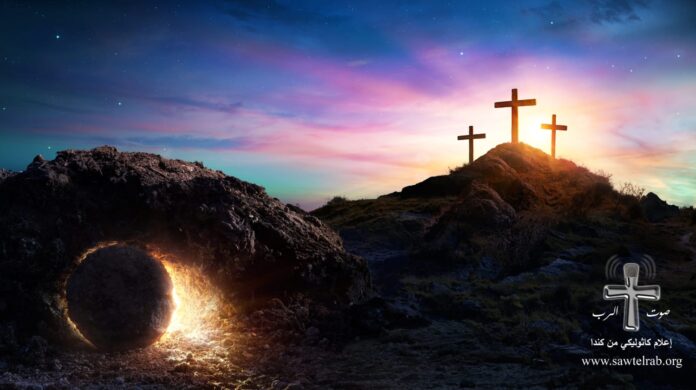
The empty tomb
“Why do you seek the living among the dead? He is not here, but has risen” (Luke 24:5-6).
Among the events of Easter, the first thing we meet is the empty tomb. In itself it is not a direct proof: the absence of Christ’s body from the tomb could be explained in other ways. Nonetheless, the empty tomb was an essential sign for all, and its discovery by the disciples was the first step towards recognizing the fact of the Resurrection.
This was the case first with the holy women, and then with Peter (John 20:2-6). The disciple whom Jesus loved (John 20:2)
affirms that when he entered the empty tomb and saw the linen cloths lying there (John 20:6),
“he saw and believed” (John 20:8). This suggests that he realized from the empty tomb that the absence of Jesus’ body could not have been of human doing, and that Jesus had not simply returned to earthly life as had been the case with Lazarus.
Catechism of the Catholic Church, no. 640