The Time of Waiting
Homily for the feast of the Presentation of Jesus in the Temple
In the name of the Father, and of the Son, and of the Holy Spirit, one God. Amen.
When Jesus was forty days old, Joseph and Mary carried him up to Jerusalem to fulfil the Law, which says that every firstborn son is consecrated to God (“shall be called holy to the Lord”), and to offer a sacrifice for him (a bit like the vows we make), according to the law of the Lord: a pair of turtledoves or two young pigeons.
This feast has an icon called the icon of the Meeting, because this feast is also the feast of the Meeting: the meeting of the aged Simeon with the child Jesus. Unfortunately, this icon won’t have a place in our current icon project. God willing, in the future, I or whoever comes after me will do an additional project that includes some other important icons too.
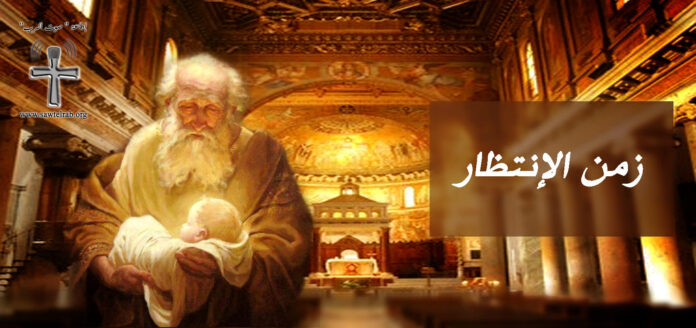
When Simeon took Jesus in his arms, two times came to an end: the time of the Temple and the time of waiting.
The first time to end was the time of Solomon’s Temple. This Temple was the most important holy place for the Jews. It was called the First Temple, or the Holy House, in Hebrew Beit HaMikdash, meaning the House of the Sanctuary. King Solomon built it and placed in it the Ark of the Covenant, which held the tablets of the commandments God had given to Moses. Nebuchadnezzar II destroyed it after the siege of Jerusalem in 587 BC. The Second Temple was built on the same site in 516 BC, greatly enlarged from 19 BC, and finally destroyed by the Romans in AD 70. The Dome of the Rock was built on the site in 691. And you all know the conflicts over this place, and how serious they are.
When the aged Simeon took Jesus in his arms in the Temple, there was no longer any need for Solomon’s Temple, because Christ the Saviour had appeared, and he is the true Temple. Christ is the Temple in which man meets God. “He who has seen me has seen the Father,” says Jesus. “I and the Father are one.” And elsewhere he says: “Destroy this temple, and in three days I will raise it up” (John 2:19). And elsewhere still: “The hour is coming when neither on this mountain nor in Jerusalem will you worship the Father… But the hour is coming, and now is, when the true worshipers will worship the Father in spirit and truth” (John 4:21-23).
The aged Simeon grasped this truth and proclaimed that the child in his arms was the Saviour, the long-awaited Messiah: “For mine eyes have seen thy salvation… a light for revelation to the Gentiles, and for glory to thy people Israel.”
And when Simeon took Jesus in his arms, another time came to an end: the time of waiting.
According to the tradition of some Churches, Simeon was one of the seventy scholars whom King Ptolemy II asked to translate the Scriptures from Hebrew into Greek around 250 BC. When Simeon reached verse 14 of chapter 7 of the book of Isaiah, he hesitated and doubted the virginity. The verse says: “Therefore the Lord himself will give you a sign. Behold, a virgin shall conceive and bear a son, and shall call his name Immanuel.” Simeon was afraid to translate the word “virgin” (hē parthenos) and be mocked by the king, so he wanted to replace it with the word “young woman”. Doubt seems to have entered him, and he asked himself: “How can a virgin conceive and give birth?” In the middle of this inner struggle between his trust in Scripture and his faithfulness as a translator on one side, and the impossibility of the thing on the other, the Holy Spirit revealed to him (as Luke’s Gospel says) that he would not see death until he had seen this Immanuel born of a virgin. Simeon is said to have lived about three hundred years. In his old age he lost his sight, but when he took the Lord Christ in his arms, he could see again. And he sang, as we heard in the Gospel: “Lord, now lettest thou thy servant depart in peace, according to thy word; for mine eyes have seen thy salvation which thou hast prepared in the presence of all peoples, a light for revelation to the Gentiles, and for glory to thy people Israel.”
At the moment Simeon met Jesus, his time of waiting came to an end. And waiting is harder than death. Waiting suffocates us all. We are all waiting for something. The young run to grow up, and the old wish they were young again. No one is content with the present, out of fear of what is coming. Waiting robs us of our joy and makes us strangers to ourselves. Even when the present is sweet, it turns bitter, because concern for tomorrow turns into worry. This is the secret and the cause of our lost happiness: we don’t know how to wait. We spend our lives waiting, without knowing what awaits us or what we are waiting for. Childhood waits for youth, youth waits for success, middle age waits for rest, and old age is the hardest and longest wait of all. The more life is filled with sad waiting, passive waiting, bitter waiting, the shorter life becomes and the shorter our days. If you want a full life, a long one even if its years are few, you must learn the meaning of positive waiting and the meaning of joy. If you understand waiting and live its beauty, you find the key to happiness. Waiting is no longer hard when you already taste the sweetness of the meeting ahead of time.
Simeon said: “Lord, now lettest thou thy servant depart…” To let depart, to release: it is a word used of a prisoner, a captive, a hostage. And perhaps, to a large extent, it applies to all of us. We are all captives waiting for the doors of deliverance to open for us. Perhaps the difference between us and Simeon is that he knew what he was waiting for.
He was a prisoner of a divine promise, and God’s prison has a gentle breeze for its bars. A meeting with God that does not release us and set us free is an illusion. Wait in faith, because God does not go back on his promise. Why the hurry? Sooner or later, however late it gets, the hour will strike. Be Simeon, and do not die before you have carried God in your arms, that is, in your heart, your mind, your speech and your conscience. Be Simeon, and do not die before your eyes have seen salvation in Jesus Christ, and before you have seen the light shining into your dark corners. Don’t let emptiness kill you. Let your waiting be like Simeon’s, in a temple of prayer, holiness, trust and surrender. Simeon, through faith, met Jesus every day. He had no emptiness: longing filled his heart. He did not grow weary or fed up, did not despair or lose his faith; instead he persevered in hope.
Today we can meet Jesus even more than Simeon did: through faith. Our meeting with him took place at baptism, and it takes place every time we receive his Body and Blood. Our meeting with Jesus happens when we live according to his will and our conscience is pure and free of all resentment. Then the Lord’s entry into the Temple becomes his entry into each of our hearts, so that they in turn become temples of God.
Homily by Bishop Ibrahim Ibrahim