The Life of Saint Veronica Giuliani and Some of Her Writings
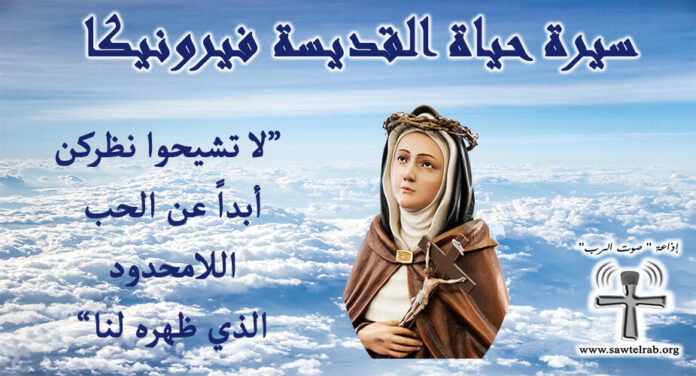
Saint Veronica Giuliani was an Italian Capuchin Poor Clare nun who lived a deep life of prayer, contemplation and union with Christ crucified. Born Orsola Giuliani in 1660, she entered the monastery at seventeen and took the name Veronica. Her life was marked by profound mystical experiences and by meditation on the Passion of Christ, and she left an enormous spiritual diary running to thousands of pages.
The birth and upbringing of Saint Veronica Giuliani
Veronica was born on December 27, 1660, in Mercatello, in the Metauro valley, to Francesco Giuliani and Benedetta Mancini. She was the youngest of seven sisters, three of whom also embraced religious life, and she was given the name Orsola.
At the age of seven she lost her mother, and her father moved to Piacenza as superintendent of customs for the Duchy of Parma. In this city Orsola felt a growing desire to dedicate her life to Christ.
The call grew more and more pressing, until at seventeen she entered the strict enclosure of the Capuchin Poor Clares in Città di Castello, where she remained for the rest of her life.
Entering the monastery and taking the name Veronica
In the monastery she received the name Veronica, which means “true image”, and she did indeed become a true image of Christ crucified.
A year later she made her religious profession. So began for her a path of conformity to Christ through many penances, great suffering and mystical experiences connected with the Passion of Jesus: the crowning with thorns, mystical marriage, the wound in the heart and the stigmata.
The life and death of Saint Veronica Giuliani
In 1716, at the age of fifty-six, Veronica became abbess of the monastery, and she remained in that office until her death in 1727.
Her death was preceded by a very painful agony lasting thirty-three days, which culminated in profound joy, so that her last words were:
“I have found Love, Love has let himself be seen! This is the cause of my suffering. Tell everyone, tell everyone.”
On July 9 she left this earthly life for her meeting with God. She was sixty-seven years old, fifty of which she had spent in the monastery of Città di Castello.
She was canonized by Pope Gregory XVI on May 26, 1839.
The writings and diary of Saint Veronica Giuliani
Veronica Giuliani wrote a great deal: letters, autobiographical accounts and poems. But the main source for reconstructing her thought is her diary, which she began in 1693.
It amounts to twenty-two thousand handwritten pages covering thirty-four years of cloistered life. The writing flows spontaneously and continuously: there are no crossings-out or corrections, no punctuation, and no division of the material into chapters or parts according to a predetermined plan.
Veronica did not want to produce a literary work; on the contrary, she was required to write down her experiences by Father Girolamo Bastianelli, an Oratorian, in agreement with the diocesan bishop, Antonio Eustachi.
Saint Veronica’s spirituality and her union with Christ
Saint Veronica had a strongly Christological and spousal spirituality: the experience of being loved by Christ, the faithful and sincere Bridegroom, and the desire to respond with an ever more involved and passionate love.
For her everything is interpreted in the key of love, and this fills her with deep serenity. Everything is lived in union with Christ, for love of him, and with the joy of being able to show him all the love a creature is capable of.
The Christ with whom Veronica is profoundly united is the suffering Christ of the Passion, death and Resurrection; it is Jesus in the act of offering himself to the Father to save us.
From this experience also comes an intense and suffering love for the Church, expressed in two forms: prayer and offering.
The saint lives in this perspective: she prays, suffers and seeks “holy poverty” as self-emptying and loss of self, in order to be truly like Christ, who gave himself entirely.
Her prayer for the Church and for sinners
On every page of her writings Veronica commends someone to the Lord, accompanying her prayers of intercession with the offering of herself in every suffering.
Her heart expands to all “the needs of Holy Church”, living anxiously with the desire for the salvation of “the whole universe”.
Veronica cries out:
“O sinners, men and women sinners… all of you come to the heart of Jesus; come to be washed in his most precious blood… He is waiting for you with open arms to embrace you.”
Moved by burning charity, she gives her sisters in the monastery attention, understanding and forgiveness, and she offers her prayers and sacrifices for the Pope, her bishop, priests and all people in need, including the souls in purgatory.
She sums up her contemplative mission in these words:
“We cannot go about the world preaching to convert souls, but we are bound to pray continuously for all the souls who offend God… especially through our sufferings, that is, through the principle of a crucified life.”
Our saint understands this mission as “standing in between” humanity and God, between sinners and Christ crucified.
Saint Veronica and the Passion of Christ
Veronica lived deeply her share in the suffering love of Jesus, certain that “suffering with joy” is “the key of love”.
She emphasizes that Jesus suffers for the sins of humanity, but also for the sufferings his faithful servants would have to endure down the centuries, in the time of the Church, precisely because of their firm and consistent faith.
She writes:
“His Eternal Father let him see and hear at that moment all the sufferings that his chosen ones were to endure, the souls dearest to him, that is, those who would benefit from his Blood and all his Passion.”
As the Apostle Paul says of himself:
“Now I rejoice in my sufferings for your sake, and in my flesh I complete what is lacking in Christ’s afflictions for the sake of his body, that is, the church” (Colossians 1:24).
Veronica even came to ask Jesus to be crucified with him. She writes:
“In an instant I saw five shining rays come out of his most holy wounds, and all of them came toward me. And I saw these rays become like little flames. In four of them were the nails; and in one was the spear, like gold, all aflame: and it pierced my heart through and through… and the nails went through my hands and feet. I felt great pain; but in the pain itself I saw and felt myself wholly transformed into God.”
Prayer for all and the hope of eternal life
The saint was convinced that she already shared in the Kingdom of God, but at the same time she called upon all the saints of the blessed homeland to help her on her earthly path of self-giving, as she waited for eternal happiness; this was the constant aspiration of her life.
Compared with the preaching of the time, which often focused on “saving one’s soul” in individual terms, Veronica shows a strong sense of “solidarity”, of communion with all her brothers and sisters on their way to heaven, and she lives, prays and suffers for everyone.
Earthly things, though valued in the Franciscan sense as a gift of the Creator, are always relative, wholly subordinate to God’s “taste” and marked by radical poverty.
In the communion of saints she explains her gift of herself for the Church and the relationship between the pilgrim Church and the heavenly Church. She writes:
“All the saints are up there in heaven through the merits and Passion of Jesus; but they cooperated with our Lord in everything he did, so that their whole life was ordered and regulated by his very works.”
The Bible in the life of Saint Veronica
In Veronica’s writings we find many biblical quotations, sometimes indirect but always apt, which reveal her familiarity with the sacred text that nourished her spiritual experience.
It should also be noted that the high points of Veronica’s mystical experience are never separate from the saving events celebrated in the liturgy, where the proclamation of and listening to the Word of God have a special place.
Holy Scripture thus enlightens, purifies and confirms Veronica’s experience, making it ecclesial.
On the other hand, her own experience, rooted in Scripture with unusual intensity, leads to a deeper and more “spiritual” reading of the text itself, entering into its hidden depths.
She not only expresses herself in the words of Holy Scripture, but she also lives by them, and they become life in her.
For example, our saint often quotes the words of the Apostle Paul:
“If God is for us, who is against us?” (Romans 8:31).
In her, the assimilation of this Pauline text, this great trust and this deep joy, becomes a reality in her person. She writes:
“My soul has been bound to the divine will, and I have truly been established and fixed for ever in the will of God. It seemed to me that I should never again be separated from this will of God, and I came back to myself with these very words: nothing can separate me from the will of God, neither anguish, nor pain, nor toil, nor contempt, nor temptations, nor creatures, nor demons, nor darkness, nor even death itself; for in life and in death I want everything, and in everything, the will of God.”
So we too are certain that death does not have the last word, and that we are established in the will of God, and therefore, truly, in life for ever.
Saint Veronica’s stigmata and her love for Christ crucified
Veronica stands out above all as a courageous witness to the beauty and power of divine love, which attracts her, pervades her and sets her on fire.
It is crucified Love that was imprinted on her flesh, as on that of Saint Francis of Assisi, with the stigmata of Jesus.
“Christ crucified whispers to me: My bride, the penances you do for those who are outside my grace are dear to me… Then, freeing one arm from the cross, he beckoned me to come close to his side… And I found myself in the arms of the Crucified. What I felt at that moment I cannot tell you: I would have liked to stay for ever in his most holy side.”
This is also an image of her spiritual journey and her inner life: to remain in the embrace of the Crucified, and so to remain in Christ’s love for others.
Veronica also lived a deeply intimate relationship with the Virgin Mary, as shown by the words she once heard from Our Lady and noted in her diary:
“I made you rest on my breast, you obtained union with my soul, which carried you and, as it were, flew with you to God.”