No “Thursday of Remembrance” and no “Drunkards’ Thursday” today in our Melkite Greek Church
Here is the explanation:
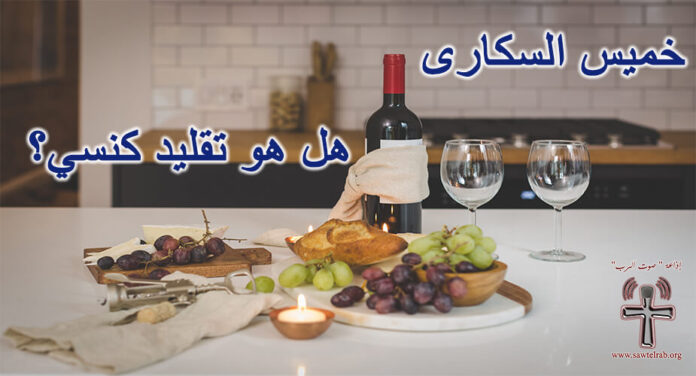
There is no “Thursday of Remembrance” (Khamis al-Dhakara) and no “Drunkards’ Thursday” (Khamis al-Sakara), neither this Thursday before the blessed season of Lent nor any other Thursday of the liturgical year, in our Melkite Greek Church or in the Orthodox tradition as a whole. The idea of a “Thursday of Remembrance” may have come about for some as a sorry attempt to do away with the made-up tradition called “Drunkards’ Thursday”. In our Church we commemorate all our fathers and brothers who have fallen asleep since the beginning twice a year: the first time on the Saturday before Meatfare Sunday, also known as the Sunday of the Judgment, which is the eighth Sunday before Pascha (that is, last Sunday); the second time on the Saturday immediately before Pentecost Sunday. So let those who allow themselves to slip a so-called “Thursday of Remembrance” into our Church’s clear and ancient tradition stop doing so.
In the Melkite Church and the Orthodox Church there are two “farewell” Sundays: Meatfare, which falls on the Sunday before the last Sunday before the fast, and then Cheesefare. In the week before the fast, called Cheesefare Week, that is, between Meatfare Sunday and Cheesefare Sunday, Wednesday and Friday are counted as fast days, in preparation for the holy forty-day fast. Of course there is no room between those two days for a “drunkards’ day”. It is also sad to see, in our Melkite Church, illogical explanations that try to justify the idea of a “Thursday of Remembrance” just a few days after the Saturday of the Departed. And we might ask where the word “dhakara” is found in the Arabic language, when we know very well that the plural of “remembrance” (dhikra) is “tidhkarat“. As for the word “drunkards”, which some link to a holy season like the fast, it is out of place and does not in any way express the intention of any Church to strengthen souls and prepare them for the holy season of fasting. Is it conceivable that the Church would name one of its feasts after drunkards, or smokers, or gamblers, and so on? Will the day come when some people start traditions no less bad than these vices and try to make them legitimate?
I was struck by an explanation from Fr. Youssef Mouannes that sheds more light on this question in the Maronite Church: “This day is called the Thursday of Abstinence (neither ‘drunkards’ nor ‘remembrance’), meaning the Thursday of setting aside meat, as we begin preparing ourselves to set aside meat because we are about to enter the fast. And this Friday is the Friday of Abstinence: each day we set aside something specific, so that on Sunday we set aside everything and enter the fast.” And he adds: “Originally it is the Thursday of Abstinence, but because this week is the week of the departed and we remember our dead all week, the word ‘remembrance’ was turned into ‘dhakara’ and people got confused. But the most important thing is that we are about to enter the fast, and we must get ready and prepare ourselves for the fast and for the feast of the Resurrection.”
From this explanation we understand that there is a single Abstinence Sunday in the Maronite Church, which remembers the departed throughout the week before the fast, and that this whole week is also the week of abstinence, ending with Abstinence Sunday.
I close with some beautiful words of Metropolitan Georges Khodr that also express my own conviction: “The superficial Christian thinks he gets there through practices. That is the height of illusion. You get there through love, because it is both the goal and the means.”
(Bishop Ibrahim Ibrahim)