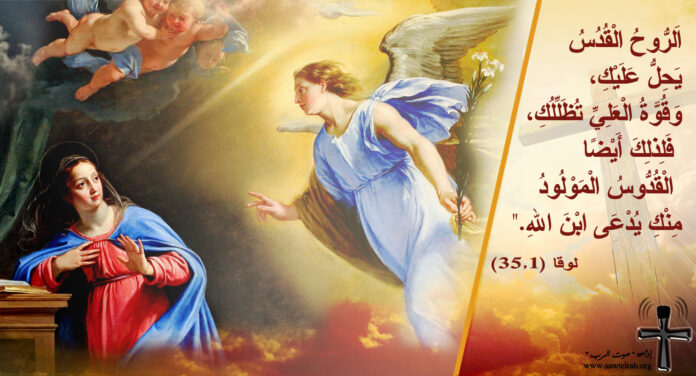
Feast of the Annunciation to the Virgin Mary
On 25 March the Church celebrates the Annunciation to our all-holy Lady, the Mother of God and ever-virgin Mary, known as the Annunciation of the Virgin or simply the Annunciation. The name of the feast explains its meaning: it is the feast of the subject of the message she received, “the incarnate Word, our Lord Jesus Christ”. It is also the feast of holy Mary, full of grace, who accepted the message from heaven and said “yes: let it be to me according to your word”.
That is why this feast is so important in the Church, which regards it as both a feast of the Lord and a feast of our Lady.
Saint Romanos the Melodist, the inspired hymnographer, says at the start of the stanzas of the famous Akathist Hymn: “The first among the angels was sent from heaven to say ‘Rejoice!’ to the Mother of God. And seeing you, O Lord, taking flesh at the sound of his bodiless voice, he stood in amazement and cried out to her…”
And with his voice salvation begins: “Today is the beginning of our salvation and the revelation of the eternal mystery: the Son of God becomes the Son of the Virgin, and Gabriel announces the good tidings of grace.” That is why, during the weeks of holy Lent, the Church sings the Akathist Hymn in preparation for the feast of the Incarnation on the day of the Annunciation. This hymn is a cosmic Christian song and at the same time a Marian song. It is the best expression of the mystery of Jesus and the mystery of Mary: from the incarnate Word came Mary’s grace, and she became full of grace.
The Feast of the Annunciation is the feast of God’s meeting with humanity. It is the feast of the Incarnation. It is the feast of Mary, Mother of the incarnate Word. It is the feast of the truth that lies at the heart of the good news of Christ incarnate in his Gospel: the feast of deification. This is what we read again and again in the services of the Annunciation and of Christmas, and indeed in every one of our prayers without exception: “God became man so that man might become god” (Saint Athanasius).
The many titles the Church gives to our Lady the Virgin Mary on this feast and on all the Marian feasts are drawn from the symbols and figures of the Old Testament, from the history of salvation, from Holy Scripture; all of them express the mystery of the Incarnation, or of deification, which is the hallmark of the Christian East.
And so the angel’s message to Mary, “the Lord is with you” (Emmanuel is with you, that is, Jesus is with you), becomes the good news of Emmanuel with all of us.