The Paraklesis: The Supplicatory Prayer to the Mother of God
The word “Paraklesis” means consolation or supplication. It is one of the most beautiful liturgical texts: a supplication and earnest plea to the Mother of God. This is not surprising, since the Virgin Mary holds a unique place in the liturgy, and many hymns and liturgical texts have been composed in her praise and to seek her intercession.
The Byzantine Church dedicates the month of August to the Virgin Mary.
It is beautiful to recall what Elizabeth, filled with the Holy Spirit, said to the Virgin Mary when she visited her: “And why is this granted me, that the mother of my Lord should come to me?” And it is even more beautiful to live these words and be aware of this presence.
From August 1 to 14, the Byzantine Church sings the services of the Small and Great Paraklesis in alternation, in preparation for the feast of the Dormition of the Mother of God. The Small Paraklesis may also be sung at any time of need, illness or distress. In monasteries it is customarily sung throughout the year at various times, and many of the faithful include it in their daily rule of prayer.
Its history: scholars are unsure whether to attribute the Small Paraklesis to the monk Theosteriktos the hermit or to Theophanes; the Great Paraklesis is said to have been composed by Emperor Theodore Doukas Laskaris.
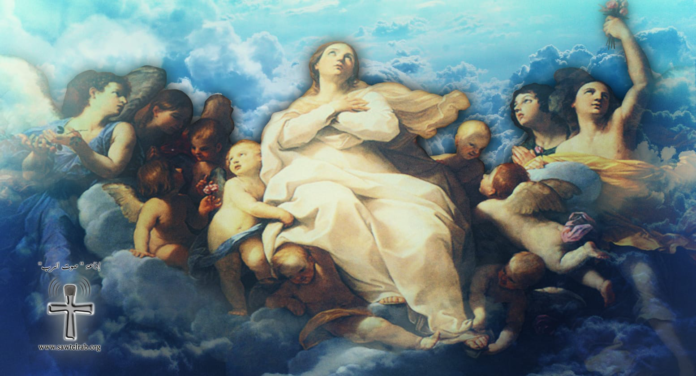
In the early centuries of Christianity, the devout people of Constantinople would carry the wood of the precious Cross in procession through the streets of the city from August 1 to 14, to consecrate the city and protect it from disease, especially eye infections, which could spread among the people that month. The patriarch and the faithful would enter the church of Hagia Sophia and recite the Paraklesis with great devotion, and they kept the fast known as the Dormition Fast, from August 1 to 14. As for the content of the Paraklesis, it is a fervent prayer that we, “who seek salvation”, “sick in soul and body alike”, raise to “the fervent intercessor”, “the hope of the faithful”, who “gave birth to the compassionate and mighty Lord” and who “does not reject the streams of our tears”, so that she may “hasten to intercede” “with her Lord and Son”, “heal the illnesses of our souls and the pains of our bodies”, “deliver us from afflictions and passions”, “from death and corruption” and “from the harm of the evil enemy” (we often fail to see that this “evil enemy” is the sin rooted in the heart that ravages it), “take away from us the sorrow of sin” and “ignorance” (our ignorance of the truth and our ignorance of prayer), and “save her people and her city” (her people today is the parish, and her city today is the believer’s heart). And when the attentive soul at prayer, “bowing before the icon of the Lady”, “forgets her people and her father’s house” and the very place where she stands, she is caught up with the Virgin through the clouds of praise “with the ranks of the bodiless powers” to where the Virgin’s Son dwells, in “the city with twelve walls” (Revelation 21). Thus the service of the Paraklesis is the most beautiful communal prayer to prepare the faithful for the greatest feast of the Mother of God.
Fr. Gerard Abi Saab